

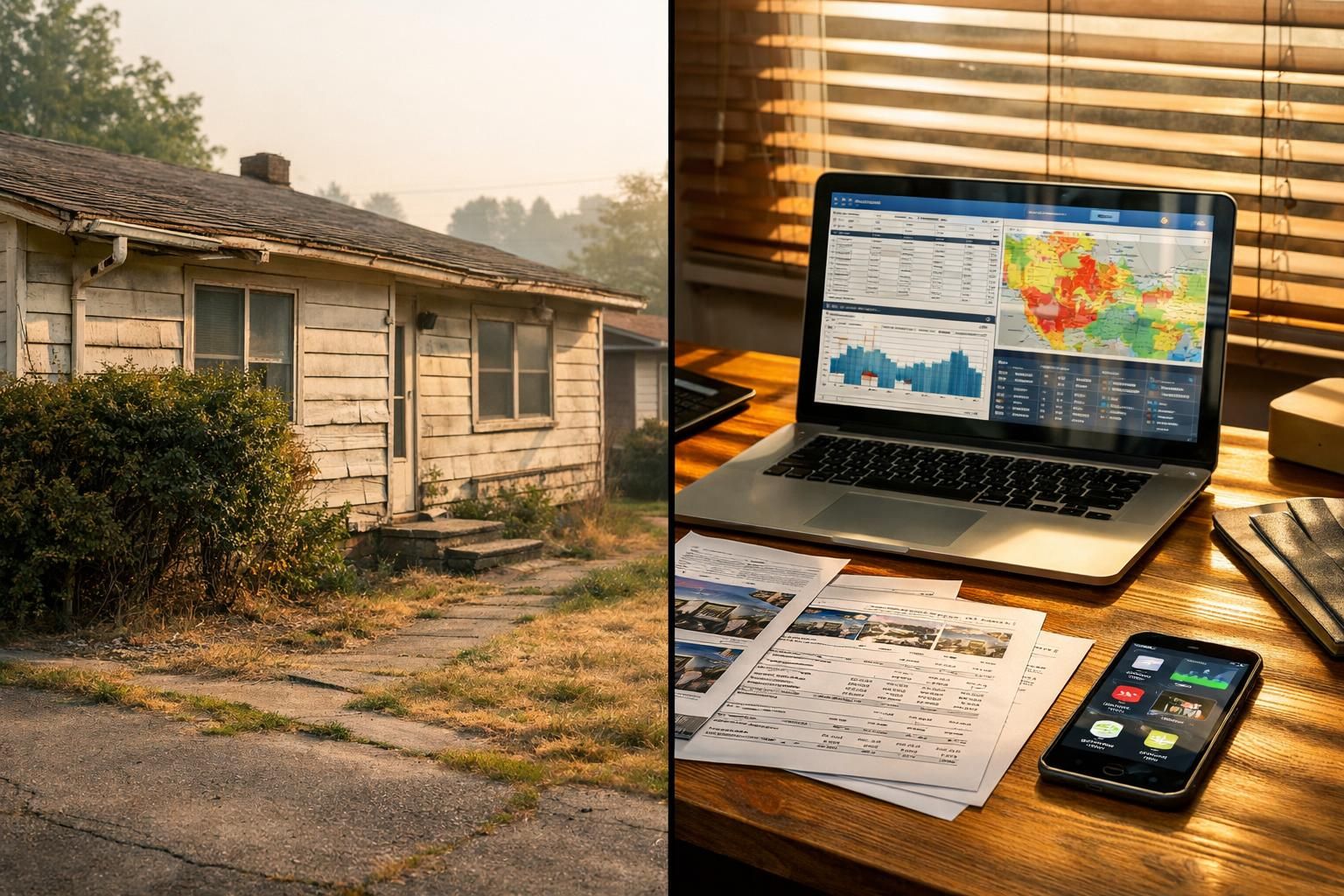

Driving for Dollars vs Digital reveals how blending traditional and tech strategies can uncover hidden real estate deals in 2026. Learn more now!
Table of Contents
- Overview of Driving for Dollars (DFD)
- Overview of Digital Driving for Dollars
- Decision Framework: When to Use Driving for Dollars vs Digital
- Tools and Technologies for Effective Deal Finding
- Risks and Challenges in Both Methods
- Implementation Steps for Both Strategies
- Market Trends in Deal Finding for 2026
- Conclusion
- FAQs
Driving for Dollars vs Digital: Finding Deals in 2026

Finding off-market properties is tougher than ever. Over 80% of real estate professionals now use technology as a core part of their strategy for deal sourcing, yet many overlook the unique strengths of driving for dollars vs digital methods. 2 You may see others racing ahead with virtual tools or sticking to old-school street scouting, but knowing when and how to use each can set you apart. This post will show you how smart investors blend digital lead generation with hands-on property scouting to reach more motivated sellers and find hidden investment opportunities fast.
With years spent guiding new and seasoned real estate investors through both in-person and virtual driving for dollars strategies, I have seen first-hand what works in today's market.
My experience includes helping close thousands of wholesale deals using innovative tech like DealMachine as well as classic fieldwork that uncovers distressed homes others miss. 3 Keep reading if you want actionable steps to bring your real estate investing results into 2026.
Key Takeaways
- Over 80% of real estate professionals use digital tools for deal sourcing, but in-person Driving for Dollars still reveals many hidden distressed properties that online searches miss.
- In-person scouting gives you the most accurate property data and helps build connections with local sellers, but it is time-consuming, less scalable, and costs more due to fuel and labor.
- Digital Driving for Dollars lets you scout multiple neighborhoods quickly using AI-powered platforms like PropStream or DealMachine; however, outdated images (sometimes up to six years old) can lower lead quality.
- Experts like Austin Beveridge recommend combining both methods—aiming to collect at least 300 leads—for better results; savvy investors often blend route planning apps with CRM systems for efficient lead tracking.
- By 2026, smart real estate investing will mix advanced mapping software (e.g., Google Maps), predictive analytics, drones, and regular neighborhood drives to maximize off-market deals while reducing wasted marketing efforts.
Overview of Driving for Dollars (DFD)
 Driving for Dollars allows you to spot distressed properties and vacant homes that online sources may miss. Use mapping software, like Google Maps or route planning tools, to optimize your search and target potential off-market deals efficiently.
Definition and process (Driving for Dollars)
You use Driving for Dollars as a direct real estate prospecting method to find off-market properties and motivated sellers. 1 Scan neighborhoods in your market, searching for signs like overgrown lawns, stuffed mailboxes, peeling paint, or boarded windows that signal distressed homes or vacant properties.
Log each address you spot using property scouting apps such as PropStream or REI BlackBook. Modern tools allow you to filter property data with more than 165 criteria so you can target absentee owners and investment properties with deferred maintenance.
Aim to collect at least 300 quality leads during these drives before starting your outreach campaign. Use skip tracing services to identify owner contact details for lead generation efforts via calls, texts, or direct mail marketing.
Track your findings in a CRM system and update lists every six months by scanning the same areas again; this keeps your list fresh and maximizes off-market deals. Some investors build teams who scout neighborhoods on an hourly wage plus commissions model, optimizing the process if scaling lead generation is critical to your real estate investment strategy.
Pros and cons of in-person scouting (Driving for Dollars)
Conducting in-person scouting through Driving for Dollars (DFD) presents unique benefits and challenges for real estate professionals seeking off-market property leads. 1 This approach leverages both observational power and interpersonal engagement, but also involves certain operational demands. The following table outlines the major advantages and disadvantages of this technique, helping you assess its fit for your investment strategy.
| Pros | Cons |
|---|---|
|
|
[In-depth Guide: Driving for Dollars](https://www.kdsdevelopment.net/articles/driving-for-dollars)
Step into effective real estate investing with the Driving for Dollars strategy. Use tools like DealMachine, REsimpli, PropStream, Batch Leads, or PropertyRadar to elevate your in-person property scouting. 2 These platforms let you plan routes and record driving activity efficiently. Snap photos of distressed properties showing deferred maintenance or vacancy to spot off-market deals and motivated sellers.
Manage your lead lists right from these apps while coordinating skip tracing and targeted follow-up marketing such as direct mail, text messages, or cold calls.
Tap into virtual options inside top DFD apps if driving is not possible. Platforms provide Google Maps integrations so you can scout remotely from anywhere in the country—even outside your home market—using Google Street View.
New users often get a free 7-day trial on PropStream with access to 50 leads for quick testing. Combine ongoing education through guides by experts like Sharad Mehta and Samantha Ankney with technology-driven property evaluation for smarter lead generation that meets changing conditions in the real estate market of 2026.
Back to topOverview of Digital Driving for Dollars

Digital driving for dollars lets you scout investment properties remotely using tools like Google Street View, Redfin, and advanced real estate apps. You can analyze neighborhoods quickly, flag distressed homes for lead generation, and target motivated sellers—all from your CRM dashboard.
Definition and process (Digital Driving for Dollars)
Virtual Driving for Dollars relies on technology like Google Street View and specialized real estate apps such as DealMachine to scout off-market properties remotely. 3 You select a target neighborhood by analyzing current trends or tapping into personal experience in the real estate market.
Explore streets online, searching for visible signs of distressed properties. Look for details that signal motivated sellers: boarded windows, overgrown lawns, deferred maintenance, or vacant homes.
Record addresses and make notes directly in your digital tool; DealMachine allows you to tag leads right inside the app and access owner contact information instantly without extra skip tracing.
Always check the date stamps on Google Street View images to confirm data accuracy before moving forward with property marketing or lead generation campaigns targeting absentee owners or FSBO opportunities.
This approach enables you to build targeted lists quickly while saving travel time and scaling outreach across multiple markets with ease.
Pros and cons of virtual scouting (Digital Driving for Dollars)
Digital Driving for Dollars transforms how you can identify real estate deals by offering powerful virtual scouting capabilities. 4 Review the following HTML table for an authoritative analysis of its key strengths and limitations as you refine your investment strategy for 2026.
| Pros | Cons |
|---|---|
|
|
Decision Framework: When to Use Driving for Dollars vs Digital

Choosing between physical property scouting and virtual route planning depends on your resources and local real estate market conditions. Use AI-powered deal analysis to target motivated sellers for off-market properties when speed and scalability matter most.
Factors to consider (time, cost, scalability, accuracy) (Decision Framework)
Efficiency, cost, reach, and precision define your approach to property scouting. The table below contrasts key decision factors for in-person versus digital Driving for Dollars, giving you a clear framework for evaluating what works best for your real estate business in 2026. 1
| Factor | In-Person Driving for Dollars | Digital Driving for Dollars |
|---|---|---|
| Time |
|
|
| Cost |
|
|
| Scalability |
|
|
| Accuracy |
|
|
Actionable takeaway: Use in-person scouting for surgical precision in tight, high-value markets where you need real-time data. Leverage digital platforms for volume, efficiency, and to scale across regions quickly. Invest in tools such as AI mapping and data filters to maximize returns while mitigating risks.
Real-world scenarios for each approach (Decision Framework)
Investors seeking off-market properties in neighborhoods near downtown often use driving for dollars. You might focus on communities about 40 years old within 20 minutes of city centers.
Direct observation lets you spot deferred maintenance or vacant homes faster than pulling broad tax delinquent lists from public records. A carefully built list of just 300 rundown houses by driving can convert leads quicker, as confirmed by seasoned investors like Austin Beveridge.
Many real estate professionals combine route planning apps and CRM tools to increase efficiency during these scouting trips.
Virtual driving for dollars serves best if you want to enter remote markets or scale lead generation beyond your local reach. Use platforms like Batch Leads and PropStream to build targeted lists and follow up with skip tracing and direct mail campaigns, focusing on absentee owners or out-of-area landlords found through property data mining.
Investors targeting older populations often rely on digital outreach methods such as cold calls or mass mailers using bulk data pulls from Google Street View paired with public databases like the 311 service for code violations in cities like Tennessee.
Lead stacking software, including ReiSift, helps refine your marketing efforts so you can prioritize high-probability deals while limiting wasted resources on low-value opportunities.
Back to topTools and Technologies for Effective Deal Finding

Smart software platforms now use predictive analytics and mapping to target motivated sellers and distressed homes for savvy investors. You can boost lead generation by integrating property data from apps like DealMachine or batch-driven CRMs into your daily route planning.
AI-powered tools for digital scouting
AI-powered tools now drive most digital property scouting. These platforms use predictive analytics to spot motivated sellers and distressed properties faster than manual research.
Apps combine big data with machine learning to estimate property values, flag deferred maintenance, and identify off-market properties worth your attention. For example, predictive models can sift through public records and real estate market trends to highlight likely investment properties.
You can run virtual driving for dollars using Google Street View or interactive mapping software while AI scans for vacant homes or absentee owners. Automation sends follow-up emails and personalized direct mail based on skip tracing results, cutting hours from your lead generation process.
Drones provide aerial views of neighborhood conditions; AI analyzes footage in real time for signs of opportunity or risk in a targeted area. Top-performing agents tap blockchain security features when handling transactions or verifying titles on new deals found via digital scouting platforms like Disqus Inc., Zillow, or Facebook-integrated apps.
A practical takeaway: Add at least one AI-powered property evaluation tool into your workflow this year to improve deal sourcing efficiency and accuracy as the technology shapes real estate investing strategies for 2026.
Mapping software and data analytics for in-person DFD
Tools like Deal Machine and PropStream now shape how you conduct in-person Driving for Dollars (DFD). 5 These real estate apps provide interactive route planning, property data overlays, and tracking features.
You use color-coded mapping to see which neighborhoods you have scouted and how recent your visits were. Reviewing past drives helps you refine your lead lists so you do not waste time with redundant property scouting.
Data analytics makes your process smarter and faster. PropStream supports over 165 search filters to help locate motivated sellers, distressed properties, or absentee owners before you even step foot on the street.
You can identify high-equity areas or target homes showing deferred maintenance for potential flips or wholesaling opportunities. Using these digital tools along with physical observation increases accuracy in finding off-market properties and strengthens your investment decisions in any real estate market. 6
Back to topRisks and Challenges in Both Methods

Both physical and virtual property scouting can miss critical details, which may lead to inaccurate list stacking or incomplete motivated seller data. To reduce risk, you should use advanced mapping software and CRM platforms to cross-reference property information before making contact with absentee owners.
Common pitfalls in physical and digital scouting (Risks and Challenges)
Physical and digital property scouting each present unique obstacles for real estate investors and agents. Recognizing these pitfalls can help you avoid wasted effort, missed deals, and costly mistakes.
- Relying on Google Maps can lead to incorrect assessments. Outdated street view images often hide current signs of distressed properties or deferred maintenance.
- Scouting in person demands extensive time and fuel. Covering large neighborhoods drains resources quickly, making it difficult for new real estate investors with limited capacity.
- Overlooking legal restrictions risks compliance issues. Contacting absentee owners or motivated sellers listed on the Do Not Call registry may violate Telephone Consumer Protection Act guidelines, and interpretations vary by jurisdiction.
- Virtual driving for dollars might produce unreliable leads. Many digital lists contain off-market properties that have already sold, wasting marketing efforts and direct mail costs.
- Digital tools can miss subtle clues like overgrown yards or vacant homes with boarded windows that only direct observation reveals.
- Heavy competition impacts traditional lead generation. Many wholesalers target the same high-profile lead lists; this saturation reduces your success rate in securing investment properties.
- Failing to update route planning or CRM software results in duplicate outreach or missed follow-ups with real estate prospects. Inaccurate property data undermines your skip tracing and list stacking strategies.
- Overdependence on predictive analytics introduces risk if AI-powered tech interprets incomplete or outdated information from real estate apps, harming your deal-finding accuracy.
Prioritize cross-checking property status using multiple sources before investing time in either virtual or physical property scouting efforts.
How to mitigate these risks (Risks and Challenges)
Risk mitigation sits at the core of sustainable real estate investing. To protect your business and enhance deal outcomes, use these targeted practices:
- Use CRM platforms like ReiSift to organize leads, automate follow-up, and reduce lost opportunities in both virtual driving for dollars and field scouting.
- Always check the date on Google Street View imagery before reaching out; avoid outdated property data by relying on up-to-date sources or re-driving routes every six months.
- Rotate your outreach strategies with a mix of direct mail, calls, texts, and door knocks to prevent list fatigue and boost engagement with motivated sellers.
- Stack public records—such as absentee owner lists, probate files, code violations—with digital scouting for reliable lead generation; this strategy pinpoints distressed properties more precisely for wholesaling real estate deals.
- Leverage skip tracing with demographic filters to refine prospect lists; target vacant homes or absentee owners while avoiding wasted marketing efforts on low-potential contacts.
- Incorporate input from 311 service logs or SeeClickFix reports into your virtual driving for dollars process so you can spot deferred maintenance issues overlooked by standard property data sources.
- Invest in educational programs like the Ultimate Investor Program or attend workshops focused on evolving technology in real estate; keep pace with shifting market trends and privacy regulations affecting cross-context behavioral advertising or personal data usage.
- Implement route planning tools integrated with mapping software so you waste less time in traffic and optimize field trips for maximum efficiency during property scouting runs in 2026's busy real estate market.
- Protect sensitive personal data by reviewing updated privacy policies from service providers such as Disqus Inc.; limit tracking cookies to comply with terms of service and ensure ethical lead generation practices.
- Adopt predictive analytics software that evaluates sales likelihood based on current market patterns to prioritize high-quality off-market properties over speculative investment prospects.
These steps will ground your approach in sound data management and strengthen your position within today’s competitive environment for real estate investors and agents seeking solid returns through effective risk management practices.
Back to topImplementation Steps for Both Strategies
Efficient use of mapping software and AI-driven real estate apps streamlines both in-person and virtual property scouting for investment properties. Apply predictive sales likelihood tools to prioritize motivated sellers, then track your outreach using a robust CRM system for lead generation results.
Step-by-step guide for in-person DFD (Implementation Steps)
Physically scouting neighborhoods offers unmatched insight into property conditions and local trends. Use this guide to execute in-person driving for dollars (DFD) with precision and consistency for optimal real estate investing results. 7
- Identify target neighborhoods that show potential for off-market properties, high rental demand, or distressed homes.
- Plan your route using mapping software, such as Google Maps or DealMachine's built-in planner, to avoid missing key streets and maximize efficiency.
- Drive slowly through each street while carefully observing homes for signs of deferred maintenance like overgrown bushes, peeling paint, boarded windows, or overflowing mailboxes.
- Pin every distressed property using the DealMachine app to document addresses, capture photos, and add notes about visible issues.
- Take thorough notes on each property—include details about absentee owners or vacant homes through visual cues and public records.
- After the drive, conduct skip tracing with platforms like BatchSkipTracing or PropStream to obtain owner contact information for lead generation purposes.
- Reach out to motivated sellers from your DFD list using a blend of direct mail postcards, calls, texts, and door knocking for higher conversion rates.
- Record every outreach attempt in your CRM system to streamline follow up and track responses efficiently across multiple touchpoints.
- Rerun the same neighborhoods at least every six months; update your property list since new distressed properties frequently appear due to market shifts or life events affecting homeowners.
This method allows you as a real estate investor to spot hidden deals before they reach the wider real estate market and helps perfect critical real estate skills required for flipping houses or finding investment properties in 2026's evolving industry landscape.
Step-by-step guide for virtual DFD (Implementation Steps)
Virtual driving for dollars lets you scout off-market properties online with precision and scale. This approach combines real estate technology, property data, and direct outreach to find motivated sellers. 4
- Identify target neighborhoods using current market trends or personal insights. Focus on areas showing high demand or increased signs of distressed properties.
- Open a real estate app like DealMachine or use Google Street View for digital property scouting. These tools offer updated imagery, route planning, and seamless navigation through each street.
- Scan for visible distress indicators such as neglected lawns, boarded windows, piled-up mail, broken fences, or trash accumulation. Properties with deferred maintenance often signal absentee owners or potential motivated sellers.
- Tag each property within your chosen virtual driving platform for easy future reference. Organize these leads to streamline follow-up efforts and boost productivity.
- Confirm the date of the street view image to ensure up-to-date property conditions before proceeding further.
- Use tools like DealMachine to access unlimited owner contact details including demographics and property history without leaving your workflow.
- Stack and sort leads by leveraging CRM systems integrated with public records databases; this prioritizes the highest quality opportunities and enhances accuracy in lead generation.
- Launch targeted outreach campaigns directly from the platform using built-in mailers, calls, or text messaging options to reach property owners quickly.
- Employ AI-powered analytics within your real estate app to refine your list based on owner profiles; this step increases efficiency in finding high-probability investment opportunities among vacant homes or distressed assets.
These steps streamline virtual driving for dollars so you can scale lead generation effectively across multiple neighborhoods while reducing overhead costs often linked with traditional in-person scouting.
Back to topMarket Trends in Deal Finding for 2026
AI-powered real estate apps and route planning platforms now shape how you scout investment properties and reach motivated sellers. Use these smart tools to speed up property evaluation, boost lead generation, and spot distressed homes before competitors find them.
Emerging technologies shaping property scouting (Market Trends)
Artificial intelligence now drives property evaluation, trend analysis, and lead generation. 8 You can use AI-powered tools to spot motivated sellers and evaluate off-market properties with speed unmatched just a few years ago.
Blockchain technology secures transactions for real estate investors while reducing fraud risk in property titles. Experts at Disqus, Inc., stress the need for strategic planning when adopting new tech like blockchain or automated CRM systems.
Drones supply high-resolution aerial views of distressed properties and vacant homes for more accurate scouting. Tools such as digital twins and IoT sensors allow you to monitor asset performance in real time, helping agents identify deferred maintenance issues quickly.
Virtual reality enables remote property tours so you can showcase investment properties to absentee owners anywhere in the world. As the market evolves toward 2026, aligning tech adoption with both operational needs and client goals remains essential for success in real estate investing. 9
Predictions for the future of real estate deal sourcing (Market Trends)
Real estate investors and agents will see deal sourcing shift to high-equity neighborhoods with advanced digital monitoring by 2026. 5 Investors will target off-market properties showing clear signs of deferred maintenance or distress, using property data powered by predictive analytics.
Mass list buying will fade as curated, high-quality lists become standard for lead generation. You should expect real estate apps and AI-powered tools like ChatGPT to drive efficient skip tracing and tailored marketing campaigns based on seller needs.
Lead follow-up processes will rely on automation for speed and personalization, making direct mail smarter and more targeted. Structured systems such as CRM platforms will manage leads while tracking deal status across virtual driving for dollars routes or physical property scouting missions.
New investors must streamline operations, focusing on a few proven sources for investment properties rather than spreading efforts thin across multiple channels. Personalized messaging about vacant homes or absentee owners can help you stand out in competitive markets shaped by technology in real estate marketing strategies.
Back to topConclusion
Choosing between Driving for Dollars and digital scouting shapes your success in 2026. Both methods uncover motivated sellers, but each brings unique strengths and obstacles. Leveraging AI-powered maps, property data analytics, and CRM platforms lets you cover more ground with greater speed.
Combine street-level intelligence from in-person drives with real-time digital tools for the highest deal flow. Start tracking at least 300 distressed properties using both strategies to maximize leads and stay ahead in today's competitive market.
Back to topFAQs
1. What does "driving for dollars" mean in real estate investing?
Driving for dollars means physically scouting neighborhoods to find distressed properties or vacant homes that may indicate motivated sellers. Real estate investors often use this method to locate off-market properties with potential investment value.
2. How do digital tools change property scouting in 2026?
Digital tools, such as real estate apps and Google Street View, allow virtual driving for dollars. Investors can evaluate property data, identify absentee owners, and plan routes without leaving their office. These technologies streamline lead generation and enhance efficiency in the real estate market.
3. What is skip tracing and why is it important?
Skip tracing helps investors track down contact information for property owners who are hard to reach or have moved away from their investment properties. This process supports direct mail campaigns and CRM (customer relationship management) efforts aimed at connecting with motivated sellers.
4. Are there privacy concerns when using technology in real estate marketing?
Yes, cross context behavioral advertising raises privacy policy questions when collecting personal data for marketing purposes. Responsible use of technology ensures compliance with regulations while respecting owner privacy during lead generation activities.
5. How does reverse driving for dollars differ from traditional methods?
Reverse driving for dollars involves leaving targeted messages at distressed properties rather than contacting owners directly on site. This approach allows investors to initiate conversations while minimizing face-to-face interaction; it also adapts well to changing societal norms around privacy.
6. What impact do these strategies have on communities and the environment?
Both physical route planning and digital methods affect local communities differently; frequent visits may highlight deferred maintenance but can disrupt residents if not managed sensitively. Digital approaches reduce travel-related emissions yet require careful handling of sensitive property evaluation data to maintain trust among stakeholders within the evolving landscape of real estate investment practices.
References
- ^ https://www.propstream.com/news/what-is-driving-for-dollars-a-modern-guide-for-real-estate-professionals
- ^ https://www.realestateskills.com/blog/driving-for-dollars
- ^ https://www.datasift.ai/blog-posts/driving-for-dollars
- ^ https://www.dealmachine.com/blog/mastering-virtual-driving-for-dollars (2024-01-23)
- ^ https://www.ijert.org/how-real-estate-investors-find-deals-in-2026-in-real-life
- ^ https://www.sciencedirect.com/science/article/pii/S2307187725001166
- ^ https://www.dealmachine.com/blog/mastering-driving-for-dollars (2025-11-21)
- ^ https://realatlas.com/real-estate-technology-2026-top-emerging-trends-shaping-the-industry/
- ^ https://www.pwc.com/gx/en/industries/financial-services/assets/uli-emerging-trends-global-report-2026.pdf