


Learn house hacking how to with practical steps for first-time investors. Build wealth while cutting your mortgage costs dramatically. Start investing toda
Table of Contents
- What's House Hacking?
- Why Gen Z and Millennials Are Drawn to House Hacking
- Popular House Hacking Strategies
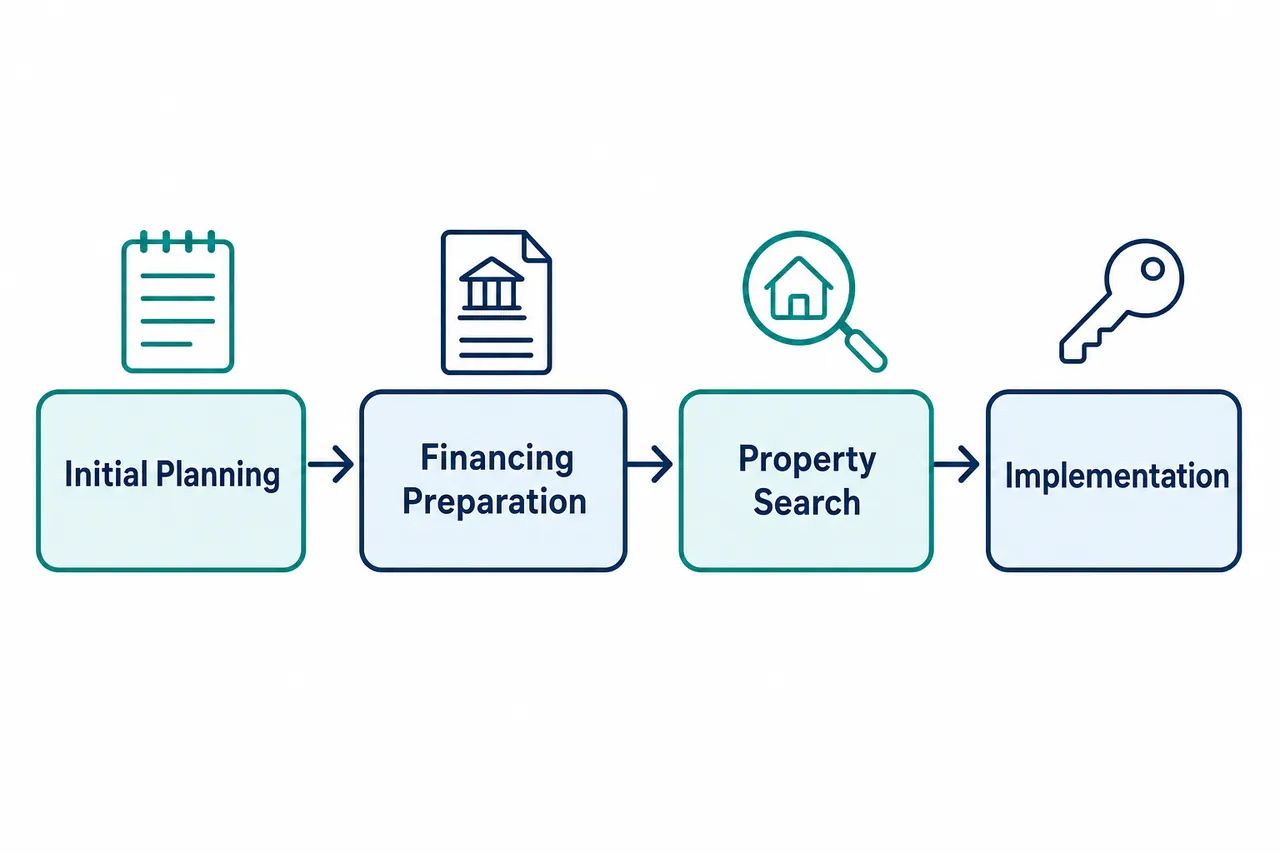
- Financing Your House Hack
- Running the Numbers: A Step-by-Step Cash Flow Example
- Financial Planning and Sustainability: Making the Numbers Work Long-Term
- Tax Benefits of House Hacking
- Legal, Zoning, and Insurance Considerations
- Finding and Evaluating the Right Property
- Tenant Screening and Management When You Share a Property
- Privacy and Lifestyle Trade-offs
- Who House Hacking Is Best For
- Common Mistakes First-Time House Hackers Make
- What Happens When You Move Out
- Action Steps: Getting Started
- Conclusion
- Frequently Asked Questions
House hacking works like this: buy a multi-unit property, live in one unit, rent the others, and let your tenants' rent shrink your mortgage to nothing (or close to it). It's genuinely one of the fastest ways for first-time buyers to break into real estate investing without destroying their personal cash flow. This guide covers the entire playbook—financing strategies, running the actual numbers, tenant screening, legal dos and don'ts, and how to stack your first deal into a real portfolio that scales.
New to single-family investing? Start with our Single-Family Investing Guide.

What's House Hacking?
Brandon Turner popularized this term. He's an investor and author who defined house hacking as an owner-occupied real estate strategy where rental income from the property you live in directly offsets your housing costs. It's the sweet spot between two worlds: homeownership (with its equity-building and owner-occupied financing advantages) and landlording (with its income and tax benefits).

Cash flow. That's what separates house hacking from buying a standard owner-occupied home. A conventional buyer pays their entire mortgage out of pocket each month. A house hacker? They route tenant rent straight toward that payment, sometimes cutting their personal housing cost down to nearly nothing. Want more context on how to get started? Check out our guide on house hacking for beginners.
Back to topWhy Gen Z and Millennials Are Drawn to House Hacking
House hacking is everywhere in younger investor circles now. And the reasons are concrete, not aspirational. Millennials and Gen Z graduated into student debt that averaged $37,000+ per person, watched home prices climb 180% faster than wage growth, and quickly learned that a single income won't cut it anymore. House hacking flips the script entirely. Instead of "Can I even qualify for this mortgage?" you're asking "How much of this payment disappears once a tenant pays rent?"
There's an ideological element too. Your generation doesn't want to buy stuff—you want to build equity. A house hack does that. Your tenant covers the mortgage while you own the asset. That's fundamentally different from paying a landlord's mortgage for them, and younger investors feel that difference in their bones.
The model also pairs perfectly with FIRE strategies gaining serious momentum with millennials and Gen Z right now. Lower your housing cost. Stack passive income. Repeat. If you're evaluating your first move into real estate, the financing advantage here is real—owner-occupied loans beat investor loans on rate and terms. What's stopping you from moving faster?
Back to topPopular House Hacking Strategies
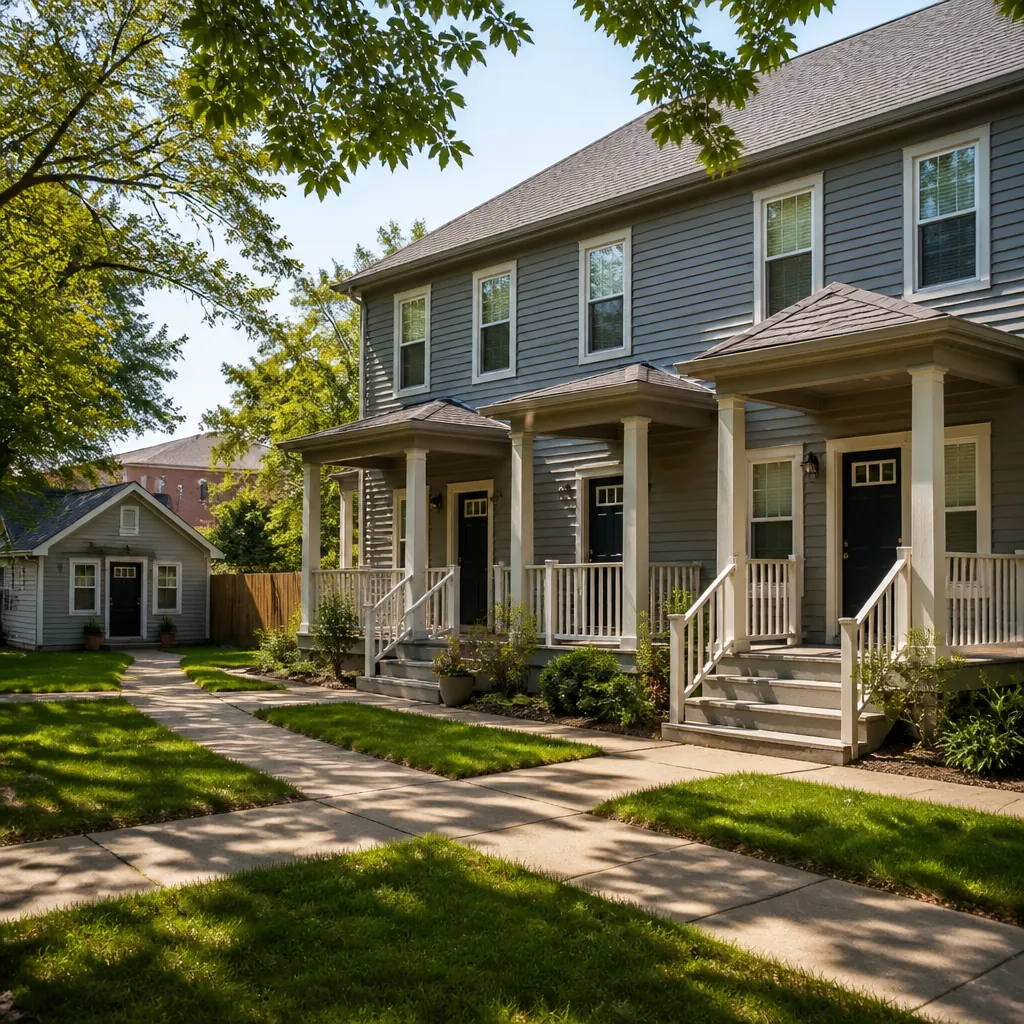
Your market and property type dictate what works. Before you start shopping, nail down which strategy actually fits your situation and your numbers.
Traditional Multi-Unit Hacking (Duplex, Triplex, Fourplex)
Buy a 2–4 unit property. Live in one. Rent the rest. That's the classic move — and for good reason. A duplex generates one income stream; a fourplex generates three. You get owner-occupied financing, which means better rates and terms than an investment property. More importantly, you're collecting the most predictable rental income you can get from house hacking, because each unit functions as its own standalone residence.
Renting Individual Rooms in a Single-Family Home
Your market might not have enough duplexes or triplexes to work with. In that case, buy a single-family home with extra bedrooms and lease them individually to tenants. Room rents often run significantly higher per square foot than whole-unit rents — especially if you're near a university or medical center. You're sharing common areas with your tenants, which is a lifestyle reality worth thinking through before you commit.
Accessory Dwelling Units (ADUs) and Flex Spaces
A finished basement apartment. A converted garage studio. A backyard cottage. Any of these add rentable square footage to your single-family property and they're worth serious consideration. Look for a separate entrance, existing plumbing rough-ins, and minimum 7-foot ceiling height. Conversion costs swing wildly depending on scope and local codes. Get contractor bids locked in before closing so your true investment is factored into your offer price.
Short-Term Rentals (Airbnb, Vacation Rentals)
Nightly rates on platforms like Airbnb can crush long-term lease numbers — but only in the right markets. Income swings seasonally, regulations keep tightening in most cities, and your management workload climbs. This strategy only pencils if you're in a high-tourism zone or premium urban market where consistent nightly rates beat what a traditional tenant would pay month-to-month.
Creative Strategies: Garage, Storage, Event Space
When rent-to-mortgage ratios squeeze your upside, supplementary income from unconventional spaces fills the gap. Rent a detached garage for vehicle storage. Lease basement square footage for personal items. Permit backyard events. None of these will cover your full mortgage, but each one chips away meaningfully at your net housing costs — and in tight markets, that matters.
Want to dig into the risk and return breakdown for each approach? Our article on house hacking tips for maximizing returns compares them side by side.
Back to topFinancing Your House Hack
Owner-occupied financing is the game-changer for house hacking. You put down far less than you'd need for an investment property — that's the structural advantage that makes this strategy work.


FHA Loans
Need just 3.5% down on 1–4 unit owner-occupied properties? FHA loans get you there. Here are the 2026 limits in low-cost markets (per HUD Mortgagee Letter 2025-23):
- 1-unit: $541,287
- 2-unit (duplex): $693,050
- 3-unit (triplex): $837,700
- 4-unit (fourplex): $1,041,125
High-cost areas bump these ceilings up. But here's the mortgage insurance trade-off: you're paying an upfront MIP of 1.75% (usually rolled in) plus an annual MIP between 0.15% and 0.75% based on your loan size, term, and LTV. For most 30-year loans above 95% LTV, that annual MIP sits at 0.55% per year.
Two rules you can't ignore as a house hacker. You must occupy the property as your primary residence for at least one year after closing. And for 3- and 4-unit deals, FHA runs a self-sufficiency test — 75% of market rents on the non-owner units need to cover your full PITIA payment. This actually validates your deal. If the numbers don't pass, you don't close.
Conventional Loans
Conventional conforming loans typically want 5% down for owner-occupied purchases. These are the 2026 conforming limits (per Fannie Mae Lender Letter LL-2025-04 and the FHFA announcement):
- 1-unit: $832,750
- 2-unit: $1,066,250
- 3-unit: $1,288,800
- 4-unit: $1,601,750
There's no self-sufficiency test with conventional loans. And unlike FHA, your PMI cancels the moment you hit 20% equity. That's the long-term cost advantage if you've got the credit score and cash reserves to qualify. Want to dig deeper? Check out our full breakdown on how to finance your first rental property.
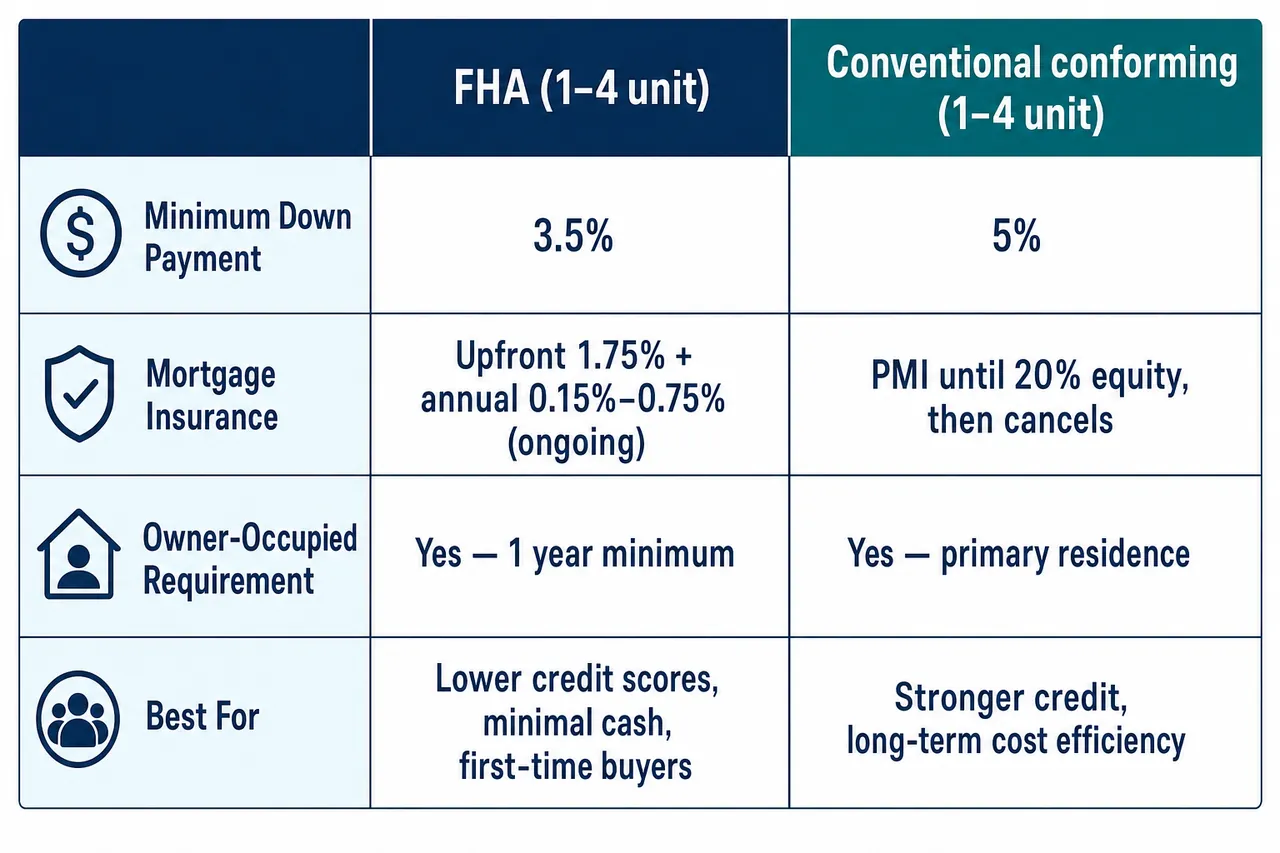
| Loan Type | Minimum Down Payment | Mortgage Insurance | Owner-Occupied Requirement | Best For |
|---|---|---|---|---|
| FHA (1–4 unit) | 3.5% | Upfront 1.75% + annual 0.15%–0.75% (ongoing) | Yes — 1 year minimum | Lower credit scores, minimal cash, first-time buyers |
| Conventional conforming (1–4 unit) | 5% | PMI until 20% equity, then cancels | Yes — primary residence | Stronger credit, long-term cost efficiency |
Running the Numbers: A Step-by-Step Cash Flow Example
Most guides gloss over this part. We're going to work through a real example with actual market data so you can run the same process on any deal you're analyzing.
Example: FHA Purchase of a Duplex
Say you're buying a duplex in a secondary market. The U.S. median existing-home price in September 2026 was $417,500 — use that as your baseline for a duplex purchase price. With a 3.5% FHA down payment, you're putting down about $14,600 and financing roughly $402,900.
Rates matter. At the 30-year fixed rate of 7.28% (Freddie Mac PMMS, week ending November 19, 2026), your P&I payment lands around $2,750/month. Now add taxes, insurance, and FHA MIP. Your total PITIA? Probably $3,200–$3,400/month depending on where you are.
But the other unit's renting for $1,400/month. That cuts your out-of-pocket housing cost down to roughly $1,800–$2,000/month. That's cheaper than renting a comparable unit in most markets. And if your area's rents are $1,800 or higher, you're basically living for free.
What you need to model:- Principal and interest (pull your amortization schedule)
- Property taxes (usually 1–2% of value annually, but it varies wildly by state)
- Landlord insurance (details below)
- FHA MIP or PMI
- Vacancy reserve (5–8% of gross rent)
- Maintenance and CapEx reserve (5–10% of gross rent)
- Property management (8–10% of collected rent if you're hiring it out)
Plug your numbers into our rental property calculator. Then run them through our cash-on-cash return calculator to see what return you're actually getting on the capital you invested.
Back to topFinancial Planning and Sustainability: Making the Numbers Work Long-Term
You need to run the numbers at purchase. But here's what separates successful house hackers from those who bail: they treat this as a multi-year commitment, not a one-time transaction. The finances have to work in year three, not just month one.
Build reserves before you close. Yes, lenders require cash to close. But reserves beyond that—typically three to six months of PITIA—keep you from panic-selling after a water heater blows or the roof needs work. Budget for a vacancy between tenants. Budget for CapEx. These aren't nice-to-haves. The expense reserves listed in the cash flow section above (vacancy, maintenance, CapEx) are what separate a sustainable investment from a financial trap.
Plan for rent growth, not just current rent. Your mortgage payment locks in on a 30-year fixed loan. Your rental income? That grows as leases renew and market rents rise. The gap between a fixed payment and rising income is where your real wealth builds. Run your underwriting out three to five years, not just year one.
Know your exit before you need one. What if your personal income dries up? What if your tenant leaves and you can't find another one? What if you get transferred before hitting the one-year occupancy mark? Don't close on a deal that only works if nothing breaks. Can you cover the full payment solo if needed? Could you sell without taking a loss? Run a stress test—zero rental income for two months—and make sure your savings can actually absorb it.
Track net worth, not just cash flow. Even if your house hack doesn't hit cash-flow neutrality, you're gaining equity through amortization and appreciation while your tenant foots part of the bill. Don't obsess over the monthly check alone. Your cash-on-cash return calculator shows the cash side. Factor in principal paydown separately to get the full picture—equity gained, mortgage paid down, and cash flow combined.
Back to topTax Benefits of House Hacking
Your house hack splits into two tax worlds. The rental unit side? You get legitimate deductions. Your own living space? Nothing. You'll need clean records to prove the split.
What You Can Deduct
Say you own a duplex and live in one unit while renting the other. That means 50% of shared expenses hit Schedule E as deductions—mortgage interest, property taxes, insurance, utilities (if you're sharing), maintenance, the works. For a room rental inside a single-family home, you calculate the deductible percentage based on square footage or number of rooms divided by total space.

Depreciation is where things get interesting. The IRS lets you depreciate residential rental property over 27.5 years. On your rental portion, you deduct that cost basis every year—it's a non-cash deduction that cuts into your taxable rental income without touching your bank account.
Passive Loss Rules and the $25,000 Allowance
When your rental expenses beat your rental income (meaning you've got a net loss), you can deduct up to $25,000 of that loss against ordinary income annually. You need two things: active participation in managing the rental and a modified adjusted gross income (MAGI) below $100,000. That allowance phases out ratably between $100,000 and $150,000 MAGI, and it's gone entirely above $150,000 per IRS Publication 925, IRC §469(i).
And here's where house hackers in lower income brackets win. During those early years when maintenance costs and startup expenses are heavy, that $25,000 allowance can absorb a solid chunk of ordinary income. You need this if you're front-loading capital improvements.
Tax Documentation to Keep
- Schedule E — reports rental income and expenses; filed with your Form 1040
- Form 1098 — your lender reports mortgage interest paid; you allocate the rental share to Schedule E
- Receipts for all repairs, maintenance, and capital improvements
- Lease agreements and rent receipts as income documentation
Get a CPA on speed dial if your property is split between personal and rental use. Those allocation calculations get tricky fast, and the IRS doesn't forgive guessing.
Back to topLegal, Zoning, and Insurance Considerations
You need to get the legal structure right before you buy. Skip this step and you're risking both your investment and your personal finances. Run these checks on every property before you make an offer.
Zoning and Local Regulations
Not every property can legally be rented. Some municipalities with single-family zoning will shut down multi-unit conversions or even room rentals to non-family members. ADU conversions? They'll need permits, inspections, and compliance with specific building codes that vary by jurisdiction.
Call the local planning or zoning department directly. Don't rely on the listing agent or what you think should be allowed. Find out the zoning classification and confirm what's actually permitted in writing.
HOA Restrictions
HOAs love restrictions. They frequently prohibit rentals entirely, or they'll ban short-term rentals specifically, or block ADU additions altogether. Some CC&Rs demand owner-occupancy for a minimum period — sometimes years — before you can rent out a single unit.
And here's what kills your numbers: HOA fees reduce net cash flow significantly. They're not optional, and you need to bake them into your expense projections. If a property sits in an HOA, read the full CC&Rs before you submit an offer — not just the fee schedule. That's where the real restrictions hide.
Short-Term Rental Legality
New York, San Francisco, and dozens of other cities have cracked down hard. Registration requirements, minimum-stay rules, outright bans on STRs in owner-occupied properties — it's a moving target.
Before you build your whole strategy around Airbnb income, verify the local ordinances. Check permit requirements. Confirm whether your insurance actually covers short-term rental use. Many policies don't.
Insurance for House Hackers
Standard homeowner's insurance won't cut it once you start renting. These policies typically exclude landlord liability and rental income coverage entirely.
The moment you rent any part of your property, you need a landlord policy (also called a dwelling fire policy) or a hybrid owner-occupied landlord policy. Some insurers offer endorsements that add tenant liability coverage to a standard homeowner's policy for in-home room rentals. Talk to your agent before your first tenant moves in — gaps in coverage can wipe you out financially.
Back to topFinding and Evaluating the Right Property
Your market choice matters just as much as the property itself. House hacking only pencils out where rents are genuinely high relative to what homes cost—think lower-cost secondary markets, college towns, or areas clustered around major employers and medical centers.
Market Analysis
High-cost metros are brutal. The September 2026 median price of $417,500 doesn't tell the real story—actual values run two or three times higher. At the current 7.28% rate, rental income from one or two units won't come close to covering your mortgage. House hacking still works in these markets, but it reduces your cost of living rather than eliminating it. That's still valuable—just don't go in expecting full mortgage coverage. Markets with strong rent-to-price ratios? That's where you can actually hit full coverage.
Property Selection Criteria
- Proximity to employment centers, universities, or hospitals (drives rental demand)
- Separate entrances for each unit or rentable space (preserves privacy for both parties)
- Existing permits for any ADU or in-law suite
- Mechanical systems in reasonable condition (deferred maintenance kills cash flow in year one)
- Neighborhood vacancy rates and comparable rents (verify with a local property manager)
Running the Numbers Before Closing
Start with our Gross Rent Multiplier calculator to sanity-check your purchase price against rent potential. Then run a full cash flow analysis using our rental property calculator—it hits every expense bucket. If the numbers don't work at today's price and rate, model a lower offer or pivot your strategy. Don't close on a deal that's already underwater on paper.
Back to topTenant Screening and Management When You Share a Property
Living on-site cuts both ways. You'll spot problems faster, but you've also got zero buffer when things blow up interpersonally. Skip rigorous screening and you're asking for trouble.
Screening Best Practices
- Run a credit check and criminal background screen on every applicant (use a compliant screening service)
- Verify income at 2.5–3x the monthly rent
- Call previous landlords directly — not just the number on the application
- Have a written lease for every tenant, even roommates; include noise, guest, and common-area policies explicitly
- Know your state's fair housing laws before advertising — protected class rules apply fully even in owner-occupied rentals (with limited exemptions; consult a local attorney)
Setting Clear Expectations
Boundaries aren't negotiable when you're living downstairs from your tenant. Write down your maintenance request protocols. Define shared spaces. Don't slip into handling every issue over coffee—that's how boundaries evaporate. Document everything.
Doing house hacking with people you already know? That's a minefield. Our guide on house hacking with friends breaks down the legal and interpersonal pitfalls you need to know.
Back to topPrivacy and Lifestyle Trade-offs
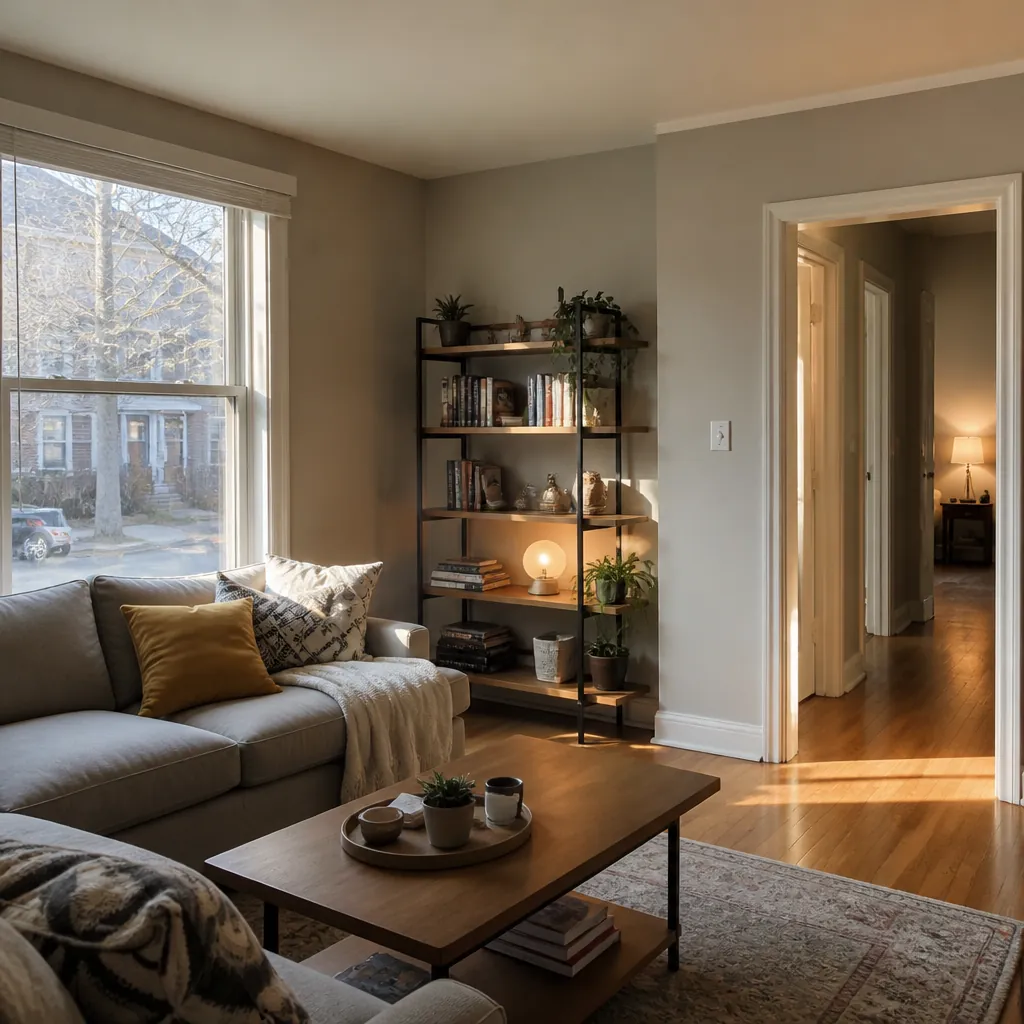
Most first-time house hackers bomb here. They underestimate what it actually feels like to share your home with tenants day in and day out. Room rentals are the worst offender — you're talking reduced quiet time, more foot traffic in common areas, and that constant landlord-tenant tension bleeding into your living space. If you're someone who needs personal space and predictable routines, the cash flow advantage can evaporate pretty fast.
Multi-unit properties (duplex, triplex) solve a lot of this. Each unit gets its own entrance, its own hallway, its own everything. The separation is real. But if you're committed to the room-rental play, treat your tenant screening like you're hiring a VP of Operations — because this person will literally be in your kitchen every morning.
Back to topWho House Hacking Is Best For
Want to build equity and rental experience at the same time? House hacking lets you do that without the full financial punch of a standalone investment property. First-time buyers especially benefit from this hybrid approach.
- Buyers who want to minimize out-of-pocket housing costs while building net worth
- Those in markets where rent-to-price ratios support meaningful mortgage offset
- Investors who plan to eventually move out, convert the property to full rental, and repeat the strategy elsewhere
- Anyone comfortable with the management and lifestyle responsibilities described above
But it's not for everyone. If you need total privacy, skip it. Same goes if you're in a super high-cost market where the numbers just don't work—your rent won't cover enough of that mortgage payment to make it worthwhile. And if you're not ready to actually be a landlord, don't pretend you are.
Trying to pick between house hacking and other entry strategies? Our comparison of BRRRR vs. house hacking shows you exactly what you're trading off with each approach.
Back to topCommon Mistakes First-Time House Hackers Make
- Underestimating expenses. Vacancy, maintenance, insurance, and CapEx reserves aren't optional line items—they're real money leaving your account. Most new investors model these after their first surprise $8,000 foundation crack, not before. That's backwards.
- Skipping legal research. You close on a fourplex, start marketing rooms, and discover your city prohibits rentals in that zone. Expensive way to learn the rules. Research zoning and ADU regs before you submit an offer.
- Not reviewing HOA documents. A $400/month HOA fee itself stings. But throw in rental restrictions and your entire cash flow model collapses.
- Choosing tenants based on personal comfort rather than qualifications. Just because you like someone doesn't mean they qualify. Run the application, pull the credit check, and call those references. Living near your tenant makes this even more critical, not less.
- Ignoring the FHA self-sufficiency test. Thinking about a triplex or fourplex? Your lender will run this test on you. Know those numbers cold before signing a contract.
- Treating rental income as guaranteed. Budget for 1–2 months of vacancy annually. And do it now. Cash flow projections built on 100% occupancy are fantasy—and they'll sink you faster than you'd think.
What Happens When You Move Out
Once you've hit the FHA one-year occupancy requirement (or your conventional loan's primary residence requirement), you can move out. The whole property becomes a rental. You keep that low down payment financing you locked in as an owner-occupant—which is the entire point.
Now it works like any other rental. All income and expenses hit Schedule E. The numbers flow through your business like a traditional rental investment.
Smart investors cycle this repeatedly. Occupy a property, season the loan, move out, then buy the next house hack with fresh owner-occupied financing. Each cycle adds another rental to your portfolio without burning through capital like traditional investment property purchases do. Want to actually scale this? Check out our breakdown on house hacking as a business—it shows you exactly how to go from one property to a full portfolio.
Back to topAction Steps: Getting Started
- Clarify your finances. Pull your credit score, savings balance, and MAGI first. These three numbers determine which loan products you actually qualify for and how passive loss rules will hit your tax return.
- Choose your strategy. Multi-unit? Room rental? ADU? Short-term rental? Pick based on what your market supports, how hands-on you want to be, and what capital you've got to deploy.
- Talk to a lender. Get pre-approved for owner-occupied 2–4 unit financing specifically. Compare both FHA and conventional options side by side, and don't skip the total monthly cost—MIP and PMI add up fast.
- Research local regulations. Zoning, permit history, HOA documents, short-term rental rules if that's your play. Do this before you fall in love with the property, not after.
- Run the numbers on every property. Model your cash flow using our rental property calculator. Then pull the cash-on-cash return calculator to compare deals side by side. A property that doesn't pencil won't magically work once you own it.
- Partner with a local agent. You need someone who actually knows investment property and owner-occupied multifamily deals—not just residential sales. They'll flag which neighborhoods have real rental demand and which properties have hidden permit problems. Check out our 10 essential steps for buying your first investment property for more on the buying process.
- Build your team. A CPA who lives and breathes rental real estate tax strategy. An insurance agent fluent in landlord policies. A property attorney who can review leases and protect you. Get these locked in now.
- Screen tenants rigorously. Have your written application, screening criteria, and lease template ready before your first tenant signs. No exceptions.
Conclusion
House hacking works. It's one of the fastest ways to move from renter to investor because it uses the one advantage owner-occupied financing actually gives you—rock-bottom down payments—to attack your single biggest expense: where you live. FHA loans still top out at 3.5% down in 2026, and the loan limits haven't gotten stingy. Most mid-tier markets are still in play. You won't find a lower entry point for a strategy this strong.
But you have to do the math. Run the actual numbers before you sign anything. Know your local rental laws inside and out—they vary wildly by state and even by city. Screen tenants like you're vetting a business partner, because that's what they are. And be real with yourself about the trade-offs: shared living space, tenant drama, the fact that your home is now your business.
When you execute it right, your monthly housing cost drops to almost nothing while you're building actual equity. That's not just a money move—it's a repeatable playbook you can run again and again.
Want to see what the numbers look like for your property? Our house hacking calculator does the heavy lifting. Or if you need the full strategic breakdown, start with house hacking explained.
Back to topFrequently Asked Questions
How long do I've to live in the property with an FHA loan?
FHA wants you in the property as your primary residence for at least one year after closing. After that? You're free to move out and convert it to a full rental while keeping your FHA financing intact.
Can I use rental income to qualify for the mortgage?
On a 2-unit property, lenders may let you count some of that projected rental income against your qualifying payment. With 3- or 4-unit properties, it gets more structured — FHA applies a self-sufficiency test where 75% of market rents on the non-owner units must cover your total PITIA payment. Conventional loans play by different rules depending on your lender, so ask your loan officer upfront what docs they want (usually a signed lease or the appraiser's market rent estimate).
Is rental income from a house hack taxable?
Absolutely. Every dollar of rental income goes on Schedule E of your federal return. But you get to subtract the good stuff: mortgage interest (your rental percentage), property taxes (rental share), insurance, maintenance, and depreciation. Run a net loss and your MAGI sits below $100,000? You can deduct up to $25,000 of that loss against ordinary income under passive activity rules.
Does house hacking work in expensive markets?
The math gets tighter as prices climb faster than rents. With rates hovering around 7.28% on a 30-year mortgage, high-cost markets typically produce rent-to-mortgage ratios that trim your housing costs but won't eliminate them. And that's okay. Just know what you're after: in those markets, house hacking solves for cost reduction, not cash flow neutrality.
What insurance do I need as a house hacker?
Standard homeowner's insurance won't touch rental activity. You need either a landlord policy (dwelling fire policy) or — if you're renting rooms in your own home — a homeowner's policy with a rental endorsement. Short-term rentals? Make sure the policy explicitly covers that; most standard policies flat-out exclude it. Lock down this conversation with your insurance agent before your first tenant moves in.
Back to topMore on single-family investing: guides and how-tos
- What Is Buy-and-Hold Real Estate Investing? The Complete Investor's Guide
- How to House Hack: Complete Strategy for Free/Cheap Housing + Income
- House Hacking Meaning: Definition, Strategies & How to Get Started
- House Hacking With Family: Strategy Guide and Pitfalls to Avoid
See our guide: “Single-Family Rental Investing: Strategies and Analysis” →